Blood tests for hypertension measure levels of potassium, sodium, cholesterol, and glucose in your blood. They may also include a urinalysis and other tests.
Blood tests
Complete blood count: Checks your blood cell count
Blood chemistry: Measures levels of potassium, sodium, creatinine, and total cholesterol
Cholesterol test: Also known as a lipid profile, this test measures levels of HDL and non-HDL cholesterol
Blood sugar (glucose) test: Determines if you have diabetes
Aldosterone test: Measures the amount of aldosterone in your blood or urine
Urine tests
Urinalysis: Can reveal kidney or liver problems
Other tests
Kidney function tests: Check for kidney damage
Thyroid function tests: Check for thyroid issues
ECG (electrocardiogram): Checks your heart’s electrical activity
Blood pressure
Blood pressure is measured in millimeters of mercury (mm Hg). A reading of 130/80 mm Hg or higher is considered high blood pressure.
Preparation
Before a blood pressure test, you should avoid exercising, drinking coffee, or smoking cigarettes. You should also sit in a chair and relax for at least five minutes.
₹3,500.00Original price was: ₹3,500.00.₹3,000.00Current price is: ₹3,000.00.
Diabetes mellitus (DM) is a metabolic disorder leading to high blood sugar levels. It is mainly of 2 types : Type 1 due to destruction of Insulin producing cells in your pancreas and Type 2 due to less production of Insulin or poor response of your cells to Insulin. Type 2 is more common and results in too much sugar circulating in your blood. Common symptoms include increased thirst, frequent urination, hunger, fatigue, weight loss, blurred vision, numbness in hands & feet. If untreated, all organs of the body can suffer damage. This panel helps to monitor blood sugar levels specially if your are a pre-diabetic or a diabetic.
₹1,199.00Original price was: ₹1,199.00.₹750.00Current price is: ₹750.00.
Polycystic Ovarian Syndrome (PCOS) affects 5-10% of women of reproductive age, making it the most common endocrine disorder of women in this age group. It is characterized by amenorrhea, hirsuitism and infertility. It is caused by a complex interaction of abnormalities in gonadotropins, androgens & estrogens. Insulin resistance and hyperinsulinemia contribute significantly to its pathophysiology. Although PCOS is associated with hyperandrogenism & infertility early in life, it is a harbinger of a lifelong condition that can lead to serious sequelae such as Endometrial or Ovarian cancer, Diabetes mellitus & Coronary artery disease. Thus, it is crucial to diagnose PCOS early in its course not only to recognize but also to delay or arrest its metabolic sequelae.
₹5,999.00Original price was: ₹5,999.00.₹4,000.00Current price is: ₹4,000.00.
Polycystic Ovarian Syndrome (PCOS) affects 5-10% of women of reproductive age, making it the most common endocrine disorder of women in this age group. It is characterized by amenorrhea, hirsuitism and infertility. It is caused by a complex interaction of abnormalities in gonadotropins, androgens & estrogens. Insulin resistance and hyperinsulinemia contribute significantly to its pathophysiology. Although PCOS is associated with hyperandrogenism & infertility early in life, it is a harbinger of a lifelong condition that can lead to serious sequelae such as Endometrial or Ovarian cancer, Diabetes mellitus & Coronary artery disease. Thus, it is crucial to diagnose PCOS early in its course not only to recognize but also to delay or arrest its metabolic sequelae.
₹3,599.00Original price was: ₹3,599.00.₹3,000.00Current price is: ₹3,000.00.
Polycystic Ovarian Syndrome (PCOS) affects 5-10% of women of reproductive age, making it the most common endocrine disorder of women in this age group. It is characterized by amenorrhea, hirsuitism and infertility. It is caused by a complex interaction of abnormalities in gonadotropins, androgens & estrogens. Insulin resistance and hyperinsulinemia contribute significantly to its pathophysiology. Although PCOS is associated with hyperandrogenism & infertility early in life, it is a harbinger of a lifelong condition that can lead to serious sequelae such as Endometrial or Ovarian cancer, Diabetes mellitus & Coronary artery disease. Thus, it is crucial to diagnose PCOS early in its course not only to recognize but also to delay or arrest its metabolic sequelae.
₹2,550.00Original price was: ₹2,550.00.₹1,999.00Current price is: ₹1,999.00.
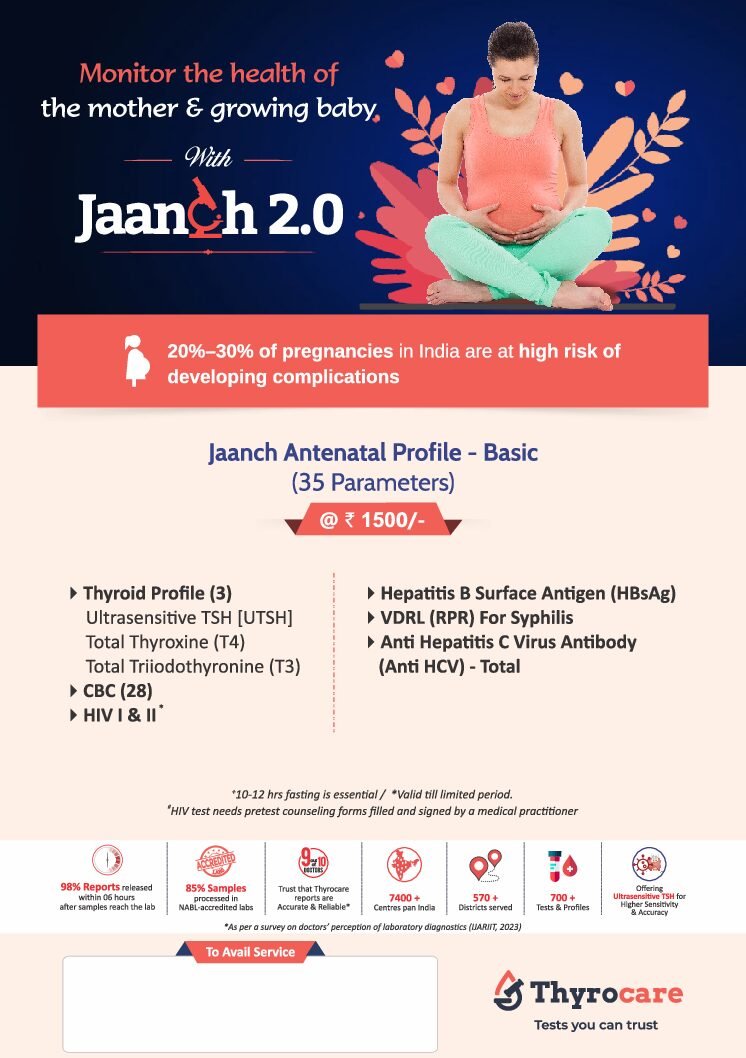
Antenatal tests are important tools for protecting the health of a pregnant woman and her child. Various tests are performed over the course of pregnancy to determine if the mother has any health conditions that may interfere with normal development of the fetus or if the fetus has any health conditions that may affect the baby’s quality of life. These tests help to identify factors requiring special care.
₹1,800.00Original price was: ₹1,800.00.₹1,500.00Current price is: ₹1,500.00.
Elevated CA 125 levels are seen in many patients with cancer of the ovary. The percentage of positive cases increases with stage of the cancer. This assay is useful for evaluating patient’s response to ovarian cancer therapy. It also helps in predicting recurrent ovarian cancer or intraperitoneal tumor.
This assay is useful for predicting early recurrence in women treated for Carcinoma Breast. It is specially useful for serial testing in women with prior Stage II / III breast cancer who are clinically free of disease
Increased levels of CEA are found in patients with primary Colorectal carcinoma and other malignancies like Medullary thyroid carcinoma and Carcinoma of breast, GI tract, liver, lung, ovarian, pancreatic and prostate. Serial monitoring of CEA should begin prior to therapy to establish a baseline for evaluating possible recurrence. Levels generally return to normal within 1 to 4 months after removal of tumor. Smokers show a higher baseline level of CEA
₹2,000.00Original price was: ₹2,000.00.₹1,299.00Current price is: ₹1,299.00.
A female cancer profile test, also known as a cancer detection profile, is a series of blood tests that measure tumor markers, which are substances that can be elevated in the blood of some people with certain types of cancers, particularly those affecting females.
Here’s a breakdown of what to expect:
Purpose:
Early detection and monitoring:
These tests can help identify potential cancers early on and monitor the effectiveness of treatment or check for recurrence.
Specific to female cancers:
The tests are designed to detect and monitor cancers that are more common in women, such as breast, ovarian, and cervical cancer.
Common Tests Included:
CA-125:
Measures the level of a protein that can be elevated in the blood of some patients with certain types of cancers, most commonly ovarian cancer.
CA 15.3:
A blood test used as a tumor marker, specifically for breast cancer.
CEA (Carcinoembryonic Antigen):
Measures the amount of CEA in the blood, a protein that may be higher in certain types of cancer, especially colorectal cancer.
Alpha-Fetoprotein (AFP):
Helps to measure levels of Alpha feto protein, which is secreted in the liver. Abnormally high levels can warn against liver cirrhosis, hepatitis or cancers too.
Beta-hCG:
Detects levels of Beta-hCG, which is created during pregnancy. However, elevated levels may also indicate ovarian tumors.
CA 19.9:
Measures CA 19.9, which an antibody released in cases of certain cancer, especially pancreatic cancer.
Important Considerations:
Not a definitive diagnosis:
These tests are not a definitive diagnosis, and further tests may be needed to confirm a cancer diagnosis.
Consult with a doctor:
It’s important to discuss the results of these tests with a doctor to determine the next steps.
Screening vs. Diagnostic:
Some of these tests are used for screening (to detect cancer early), while others are used for diagnosis or monitoring treatment.
Other tests:
In addition to blood tests, other screening tests, such as mammograms, Pap tests, and colonoscopies, are also important for detecting cancer in women.
Individualized approach:
The specific tests and screening recommendations may vary depending on a woman’s age, risk factors, and medical history
₹5,000.00Original price was: ₹5,000.00.₹3,999.00Current price is: ₹3,999.00.